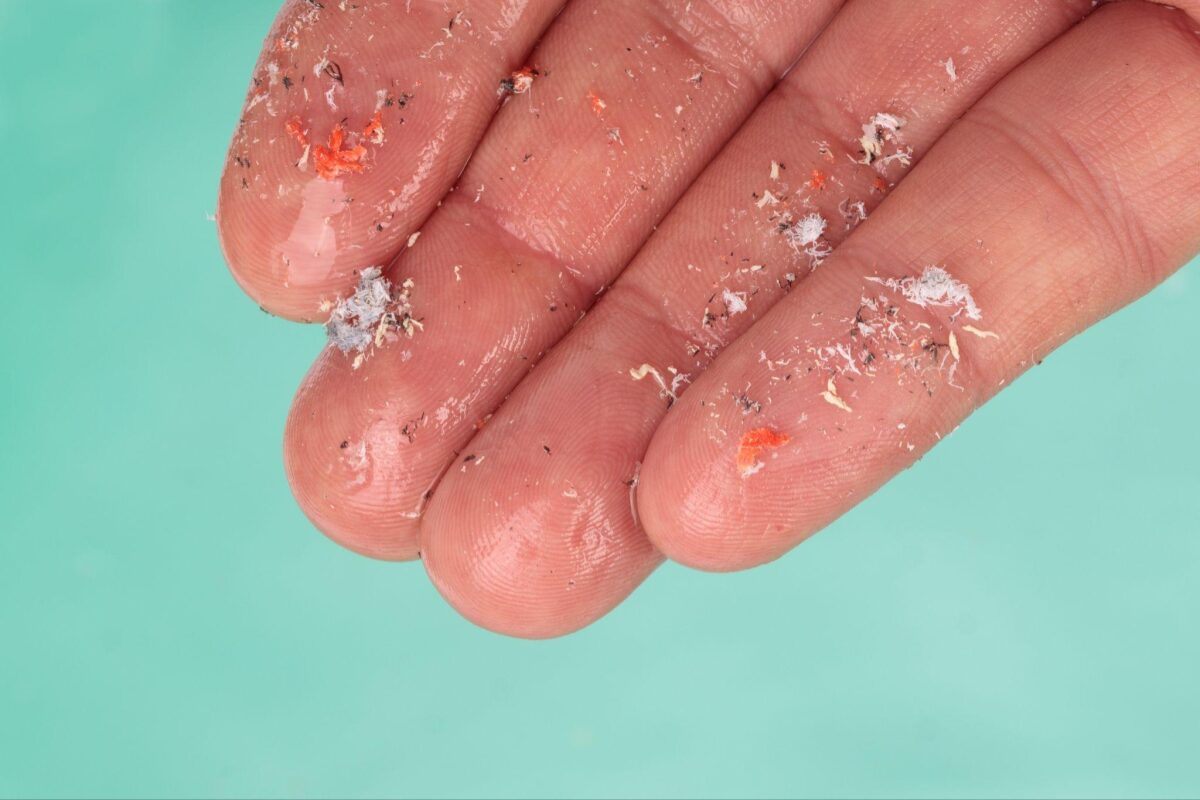
URBANA, IL (Chambana Today) — Researchers at the University of Illinois Urbana-Champaign are studying how microscopic plastic particles may influence foodborne pathogens, with new findings suggesting nanoplastics can alter the behavior of Salmonella.
As plastics break down, they form nanoplastics — particles small enough to interact with biological systems in ways scientists are still working to understand. In a recent study published in the Journal of Hazardous Materials, researchers examined how polystyrene nanoplastics affect Salmonella enterica, a leading cause of foodborne illness.
“Salmonella enterica is a major foodborne pathogen that is often found in meat, poultry, and ready-to-eat food. We are testing ground turkey from grocery stores in our lab for a study on food safety, and finding that it is frequently positive for Salmonella. If you cook the meat properly, you should not have a problem. However, ground turkey is often packaged in plastic, and we wanted to explore how Salmonella react when they come into contact with plastic polymers,” said senior author Pratik Banerjee, associate professor of food science and human nutrition.
The team found that brief exposure to nanoplastics increased the expression of virulence-related genes and led to thicker biofilm formation.
“We examined the physiology of Salmonella in response to nanoplastics, and we found an increased expression of virulence-related genes. The bacteria also formed thicker biofilms, which further indicates they are becoming more virulent,” said Jayita De, a graduate student and lead author on the paper.
However, prolonged exposure appeared to weaken the bacteria’s stress response.
“When the bacteria first encounter nanoplastic particles, they go into offensive mode and become more virulent. But after a while, they start losing their resources and energy, so they switch to defensive mode, which allows them to persist in the environment for a longer time. If the concentration of nanoplastics rises, they can again switch to an offensive mode. It’s a trade-off between offense and defense,” De said.
Researchers also are examining whether nanoplastics may contribute to antibiotic resistance.
“Any compound that puts physiological stress on the bacteria can trigger antimicrobial resistance. Nanoplastics are not antimicrobials, but mere exposure to them could convert bacteria that previously were not resistant to a particular antibiotic in a process called cross-resistance,” Banerjee explained.
“However, we don’t want to sound the alarm and advocate that people stop using plastics. Plastic packaging provides a lot of benefits, such as reducing food spoilage and waste while keeping expenses low. We don’t know yet whether this is something we should be worried about,” he said.
The researchers say more study is needed to determine the broader public health implications and whether the findings warrant policy changes.