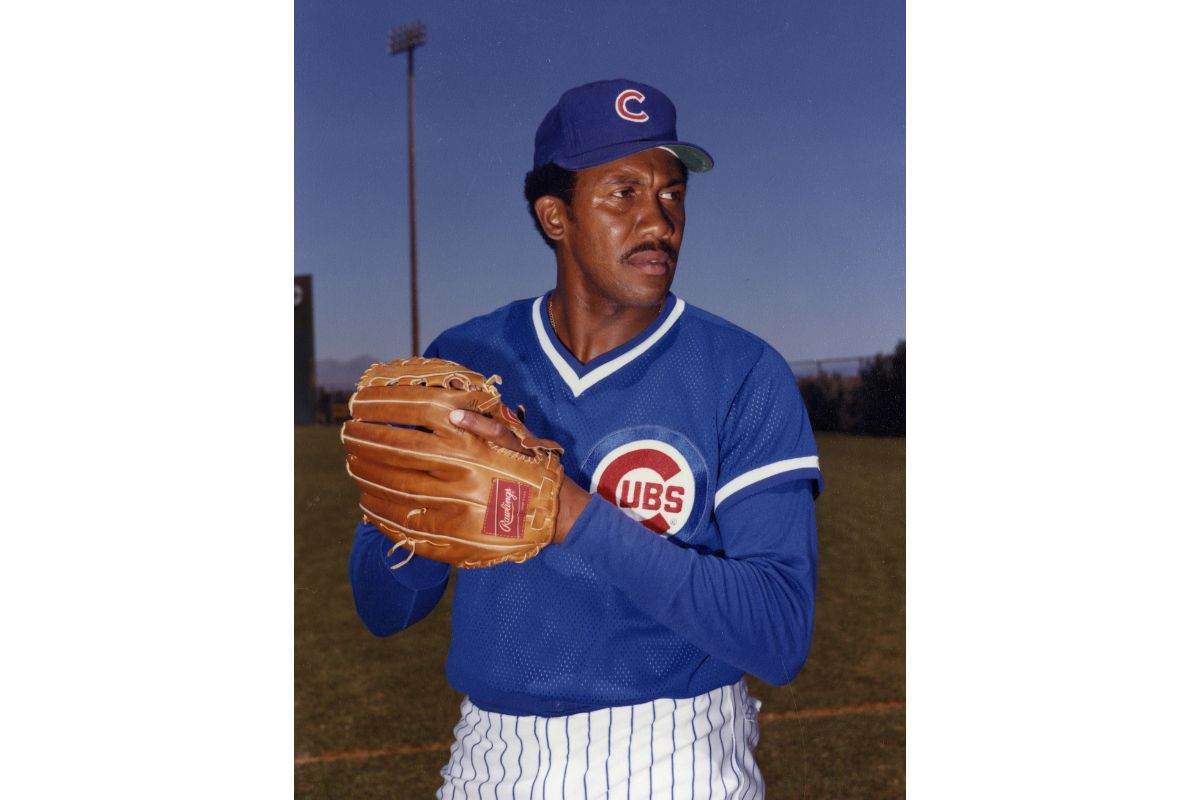
CHAMPAIGN, Ill. (Chambana Today) — Fergie Jenkins, the Chicago Cubs’ all-time strikeout leader and a Hall of Fame pitcher, recently sat down with our newsroom to reflect on his 21-season professional career, the evolution of Major League Baseball, and his involvement in a new documentary honoring Dick Allen, a trailblazing teammate and 1972 MVP winner with the Chicago White Sox.
Jenkins, who spent 19 of his 21 professional seasons in the major leagues, spoke candidly about how pitching philosophy, player development, and game management have changed over time. He said modern baseball has shifted away from relying on starting pitchers, placing far more emphasis on bullpens.
“Now the theory to win a ball game belongs to the bullpen,” Jenkins said. “When I pitched, the starting pitcher was the key to winning. If you couldn’t go deep into a game, you got no credit.”
He criticized today’s reliance on pitch counts and early hooks, arguing that starters are no longer given the confidence or responsibility they once had. “They don’t let you finish games anymore. The bullpen takes over. That’s too many people sitting and not doing enough work,” he said.
Jenkins also noted how the art of pitching has changed, pointing to longer at-bats and higher pitch totals. “They throw too many pitches in an inning. You face a hitter 10 or 12 times in a ballgame now because of foul balls. Back in my day, 100 pitches, you were considered deep in a game. You had control, you had strategy,” he said.
When asked about today’s elite pitchers, Jenkins didn’t hold back. “The guys now, they don’t pitch long enough. They don’t get confidence from the manager to stay in the game,” he said.
Reflecting on his own career, Jenkins spoke with pride about consistency and competitiveness. “I played the game as fair as possible. I had 10 straight 20-win seasons. My career was mostly day games, and the strikeouts were important to win ballgames or keep my team in it,” he said. He added, “I lost 45 career games when my team didn’t score a run. Did it frustrate me? No, it fueled me.”
He recalled facing some of baseball’s most legendary hitters and pitchers, emphasizing the respect and preparation that defined those matchups. “I faced Steve Carlton, Tom Seaver, Jim Palmer, Reggie Jackson, Mickey Mantle, Ricky Ledée… every time you stepped on the mound, you respected them. They were incredible hitters,” Jenkins said. He later added, “You had to know who you were pitching against. I faced the number one pitcher on the other team. That’s not done anymore.”
Jenkins also reflected on his early career and the challenges he and other players of color faced, particularly alongside Dick Allen. “Dick Allen and I played together in Little Rock in 1963. Fans didn’t want players of color there. He got through it, became MVP of the team, and later Rookie of the Year with the Phillies,” Jenkins said. “I was fortunate — I went on to pitch in the big leagues and learned so much from those early days.”
Those experiences are explored in a forthcoming documentary honoring Allen, which Jenkins has helped promote. “Dick and I played together from A-ball to the big leagues. In Little Rock, the fans didn’t want players of color. They’d yell, they’d try to get under your skin,” he said. “But Dick snapped out of it and became MVP of the team. The documentary shows his greatness — he hit over 30 home runs, stole bases, did it all. He was a great asset.”
Jenkins also reflected on the personal meaning of his legacy. He described induction into the Hall of Fame as the pinnacle of his career and a reflection of years of hard work and earned respect. He credited consistency, discipline, and preparation — along with genetics, focus, and training — for his longevity.
He said the Cubs’ decision to retire his number and honor him with a statue at Gallagher Way remains one of the most humbling moments of his life, calling it unforgettable and deeply meaningful.
Despite the evolution of the game — including changes he compares to the NBA’s three-point revolution — Jenkins remains actively involved in baseball. He regularly participates in fantasy camps and spring training programs, mentoring younger players and sharing lessons learned over decades in the game.
“I love going back, visiting the ball club, talking to young players, letting them see what it means to compete, stay healthy, and be smart about the game,” Jenkins said.
From his early days in Canada to his storied career with the Cubs and the Texas Rangers, Jenkins said his message to young players, especially players of color, remains simple: “Play the sport with gratitude, work hard, stay healthy, and give it your all. Respect, effort, and love for the game — that’s what carries you through a career.”